Suddenly even our gadgets have opinions…
Read on….. to explore how comfortably we can really live alongside machines that seem to think for themselves.
AI has quietly entered the retirement chapter of our lives — yes, it’s sneaking in (indeed, into everything). It’s in the financial tools — those clever robo-advisers managing our savings — in the apps that track our health, and in the gadgets that promise to make daily life just a bit easier… perhaps.
That’s exciting, of course — but it also means we’ve got a little more homework to do: keeping up with the tech, learning to trust digital advice (it hallucinates too, so at least we’re in good company!).
So, do we jump right into the deep, mercurial depths of this mysterious new world?
For some of us older guys, even WhatsApp can be a challenge — so how on earth do we approach something this advanced? I suspect those retirees who dive in will discover not only a sense of adventure, but genuine benefits from engaging with AI.
As my friend’s late dad, Giovanni, loved to say: “Paulo, talk is cheap and money buys whiskey.”
So yes — I’m diving in. Let’s explore how we, the retired (or semi-retired, or pseudo-retired — heh-heh), can actually make this brave new AI world work for us.
So where exactly is AI showing up in our in the lives ? Let’s take a closer look.
Design for All Ages
According to the American Association of Retired Persons (AARP)¹: “120 million Americans are now over 50, yet 59% of them feel today’s technology isn’t designed with their needs in mind.” And the numbers keep growing — by 2030, more than one in five Americans will be 65 or older. In Europe, it’s already 1 in 5 aged 50 or above, while in Africa the ratio is closer to 1 in 10².
The problem isn’t that us ‘older ‘Younger’ guys cannot learn; it’s that tech often values flash-and-shiny over function. While the world powers race to win AI supremacy — with the U.S. pouring billions into OpenAI³ to outpace China’s DeepSeek⁴ — many of us simply want tools that work. And preferably without needing a grandchild on speed dial.
The real challenge for AI in our corner of society is not just thinking smarter (and yes, you are probably wondering: can these machines actually think?⁵); Different generations interact differently — and AI will need to adjust in much the same way. Just like my grand-kids instinctively raise their voice or drift toward my “good ear”… heh heh
Not So Complicated After All
“But I don’t understand it — it’s complicated and not for me,” I often hear some of my acquaintances say. Fair enough — new tech can seem intimidating. The truth is, we do not need to fully grasp how this so-called machine learning magic works (though if you’re curious, see “How Machine Learning Works”⁵). Yet, for the price of a dinner for two, you can buy an AI-enabled speaker — think Alexa or Google Nest — that might just surprise you and may just be the best investment you will make in your sunset years.
This little gadget – a speaker – can become your buddy, an encyclopaedia on steroids, and a fun source of entertainment. And it is as simple to use as… talking, yes you talk to it. Just ask it a question.
My Google Nest speaker lives in the kitchen. . Ask it, “How long will it take to drive to Sun City?” and it will answer instantly — though perhaps not offer to pack my bags – not yet ( albeit robo-James – the butler of the future – may soon do) !
But that is the mundane stuff. These devices can answer the most complex or curious questions too:
– “Explain DNA in simple terms.”;
– “What does the Christian belief ‘once saved, always saved’ mean?”
– Or just for fun: “Play some happy 80s music.”
It is simple and easy — and fun — once you give it a shot.

Where AI Is Already Around Us
Here are just a few ways AI has quietly infiltrated our lives:
We have the chat-bots, those digital versions of Casper the Friendly Ghost, who in some cases are even becoming companions to the lonely — reminding us to take medication or simply expecting a cheerful “Good morning!”
Some bots in home-care settings are “trained” to expect us to greet them every morning; failing which, an alert is sent to the caregiver.⁵
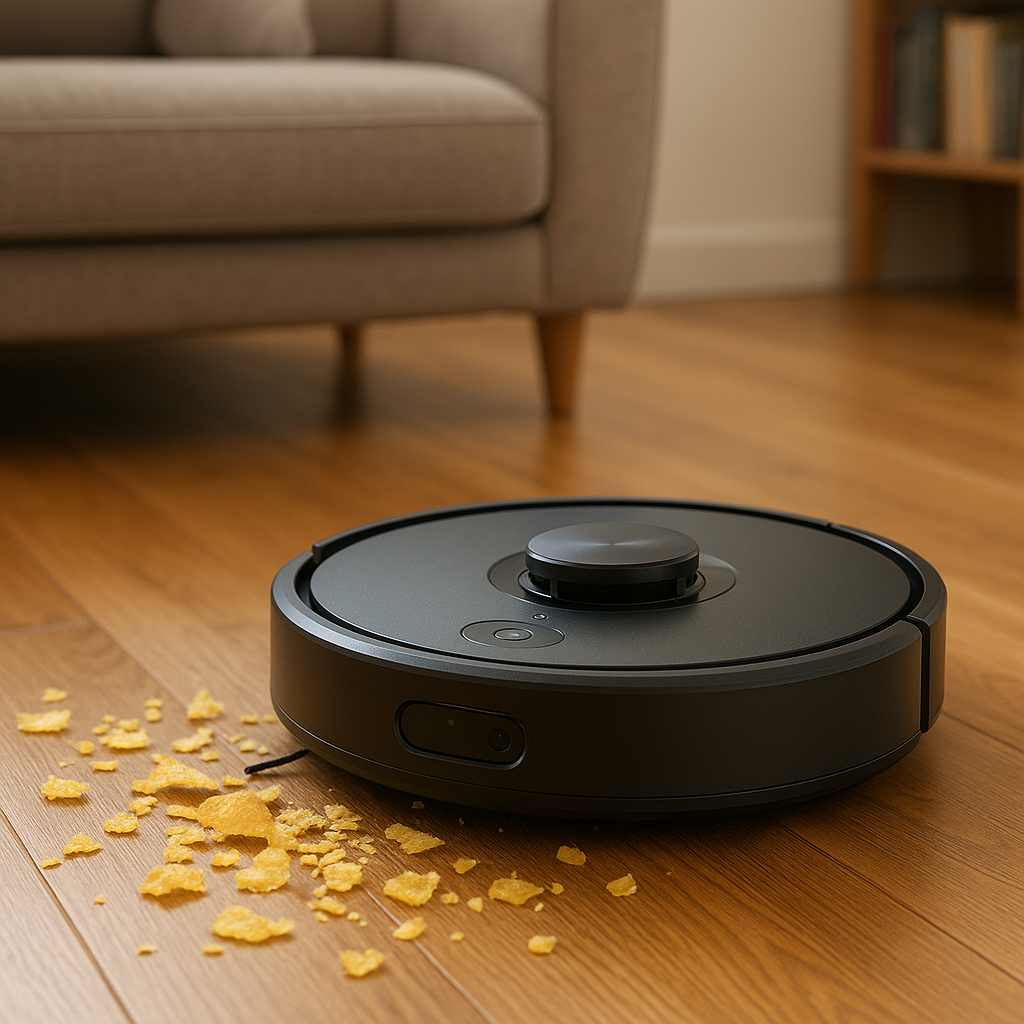
At home, there’s the AI-powered vacuum that proudly remembers the layout of our rooms — and, naturally, where I make the biggest mess with my crisps in front of the TV.
But of course, we’ve all also battled the AI call-centre bot that stubbornly refuses to connect us with a real human who might actually understand our question.
This all assumes that we ‘Younger’ guys are tech-savvy enough — and curious enough — to brave engagement in this new world. Personally, I’m convinced this technology will permeate and infiltrate every domain of our lives. So yes, I intend to learn and dominate this new paradigm — albeit some say that we will become subservient to this super-intelligence once the “synchronicity” stage is reached.⁶.
AI in Action — Helping Us Live Smarter, Not Just Longer
If you haven’t noticed, AI is already embedded in our daily routines — and in a few cases, even helping. So if you’re wondering what’s actually useful out there, here are a few AI solutions worth exploring:
Health and Peace of Mind
Those smartwatches and fitness trackers have turned into personal assistants that never sleep — keeping an eye on our heart rate, sleep, and blood pressure (yes, somewhat Orwellian). They ping us when it’s time to move, rest, or take our pills — yea. we all take pills , don’t we? – even when we’d rather not be reminded. Some can alert a doctor or loved one when something looks off — which is, admittedly, reassuring.
In South Africa, health insurers like Discovery and Momentum are already integrating AI-powered wellness data into their Vitality and Multiply programmes³, rewarding healthy habits with points and perks. (My rather intense 80-minute squash-doubles match the other night — heart rate hovering around 70% — earned me 300 Discovery points, albeit no match win!)

Purpose and Participation
AI powers volunteer-matching platforms like Do-It.org, Catchafire, and South Africa’s own Zlto⁷.
And so, for those who want to earn a bit on the side or are just looking to remain involved in helping others — platforms like Upwork⁶ offer retired professionals chances to do consulting, writing, bookkeeping, editing, or mentoring on their own terms.
Home Sweet (Smart) Home
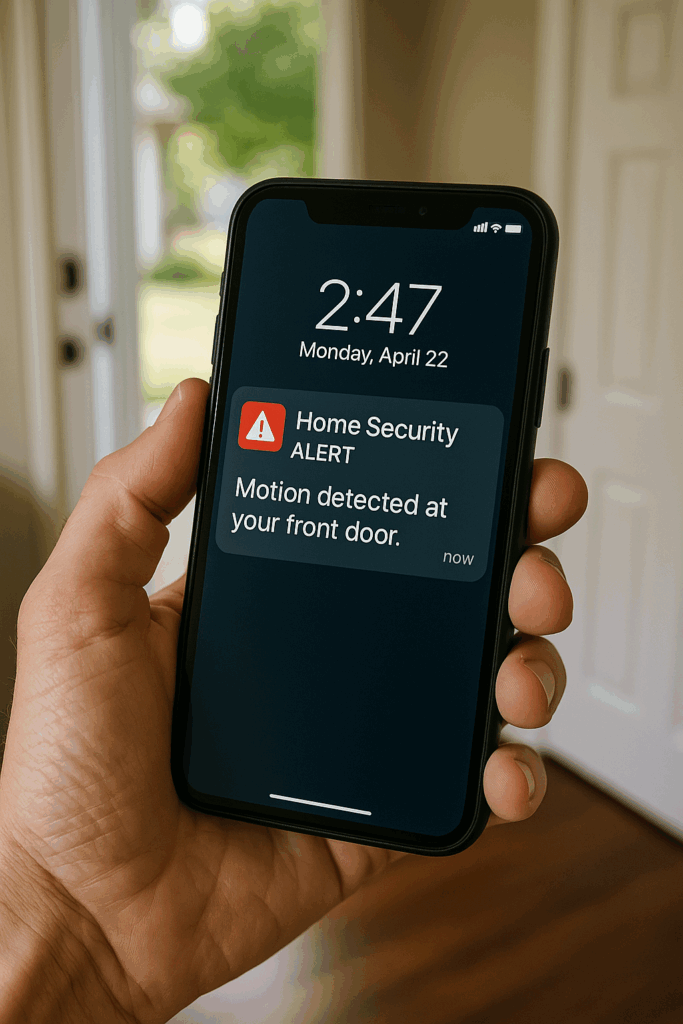
Locally, AI-driven home-security systems such as AI-powered camera analytics from Fidelity ADT and Ring⁴ are becoming common, sending instant alerts when something (or someone) moves where it shouldn’t.
AI & Existential Threats
I see AI as a positive development for our society , the young and ‘Younger’ but there is — though not everyone realizes it — a constant stream of posts bombarding us with warnings about the existential threat that AI poses. The most extreme of these predict that AI will one day achieve super-intelligence and ultimately dominate us according to its own “will.”
That is a fascinating — and slightly terrifying — topic in itself, one that deserves its own post (and perhaps a stiff whiskey drink).
In Summary
This tech can be super useful — if not yet truly golden-age-friendly. But here is the thing: if you and I choose not to adopt and assimilate this new wave(s) of AI, we may well be the poorer for it — not just in knowledge, but in opportunity. Embracing AI might just give us the best possible shot at living longer, healthier, and more connected lives.
References
¹ AARP Research, 2024 Technology Trends Among Older Adults
² Eurostat & United Nations Population Division, World Population Prospects 2024
³ Microsoft Investment Disclosures in OpenAI (2023–2024), U.S. SEC filings
⁴ DeepSeek (01.AI) — China LLM Research Program, 2024–2025
⁵ Alan Turing, Computing Machinery and Intelligence (1950)
⁶ CarePredict & ElliQ — “Passive Monitoring and Conversational Check-in AI”, Pilot Evaluations 2023–2024
⁷ Ray Kurzweil, The Singularity Is Near (2005)
⁸ Discovery Health & Momentum Multiply, Wellness Programme AI Data Integration Reports (2024)
⁹ Do-It.org, Catchafire, Zlto — skills-based volunteering platforms
¹⁰ Upwork — “Flexible Freelance Work for Experienced Professionals”, Platform Overview
¹¹ Fidelity ADT & Ring — AI Camera Analytics Product Sheets (2023–2024)
¹² Google Cloud, How Machine Learning Works (2024)
¹³ MIT Future of Life Institute, AI Existential Risk Overview (2024)
¹⁴ Amazon Alexa & Google Nest — Household Routines & Assistant Automation Documentation (2024)
Leave a Reply